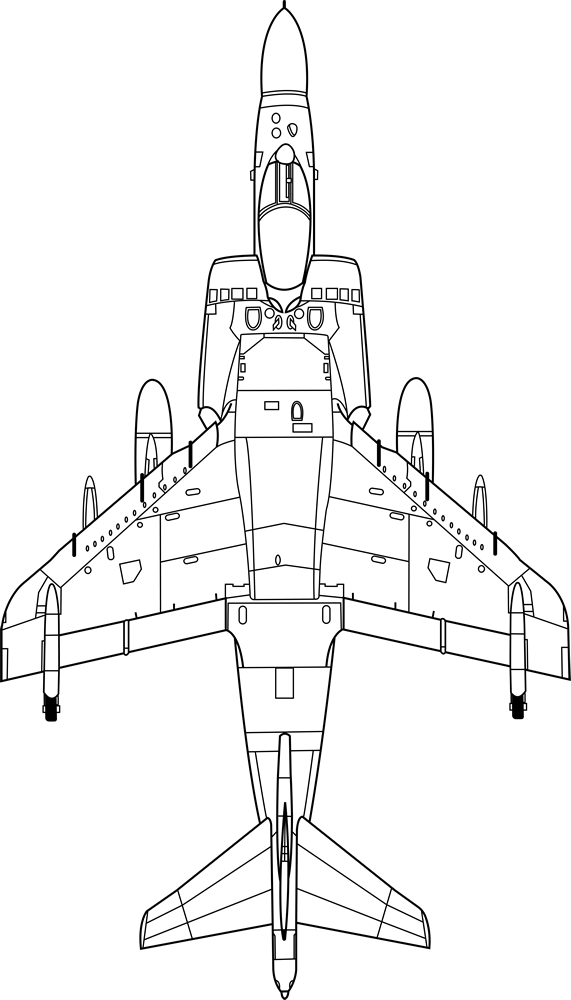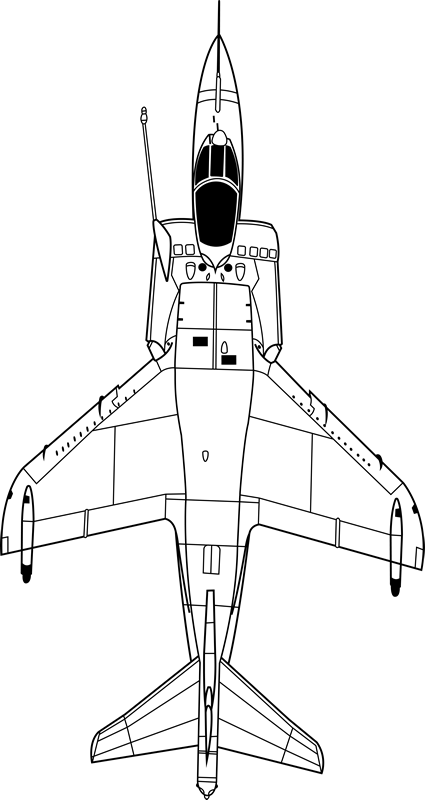
The Sea Harrier FRS1 was the Royal Navy’s first dedicated fixed-wing carrier fighter, developed by Hawker Siddeley (later British Aerospace) as a navalized version of the Harrier jump jet. Entering service in 1979, it became famous for its pivotal role in the Falklands War (1982), where it achieved an impressive air-to-air kill ratio against Argentine aircraft, despite being outnumbered.
The FRS1 was designed for air defense, reconnaissance, and strike missions, operating from Invincible-class aircraft carriers and small landing platforms. It was equipped with the Blue Fox radar, a key advantage in the South Atlantic conflict, allowing pilots to engage enemy aircraft in poor visibility.
The FRS1 was crucial to Britain’s ability to operate a modern air force from the sea, proving its worth in combat despite its relatively small numbers.
The Sea Harrier FA2 was an upgraded version of the FRS1, introduced in 1993 with significant improvements, particularly in avionics, weaponry, and engine performance. It was developed to counter more advanced threats, incorporating the Blue Vixen radar, which was one of the most advanced pulse-Doppler radars of its time.
The FA2’s most notable upgrade was its ability to carry the AMRAAM (Advanced Medium-Range Air-to-Air Missile), vastly improving its air-to-air combat capability. The cockpit was also modernized, and the aircraft received better defensive countermeasures.
The FA2 remained in service until 2006, when the Royal Navy retired the Sea Harrier fleet, transitioning to carrier-based operations with joint aircraft like the Harrier GR9 and later, the F-35B Lightning II.