
The Rolls-Royce Pegasus engines are a family of turbofan engines specifically designed to power the Hawker Siddeley Harrier series of Vertical/Short Takeoff and Landing (V/STOL) aircraft. These engines played a pivotal role in enabling the Harrier’s unique capabilities. Here’s a breakdown of the key variants you mentioned:
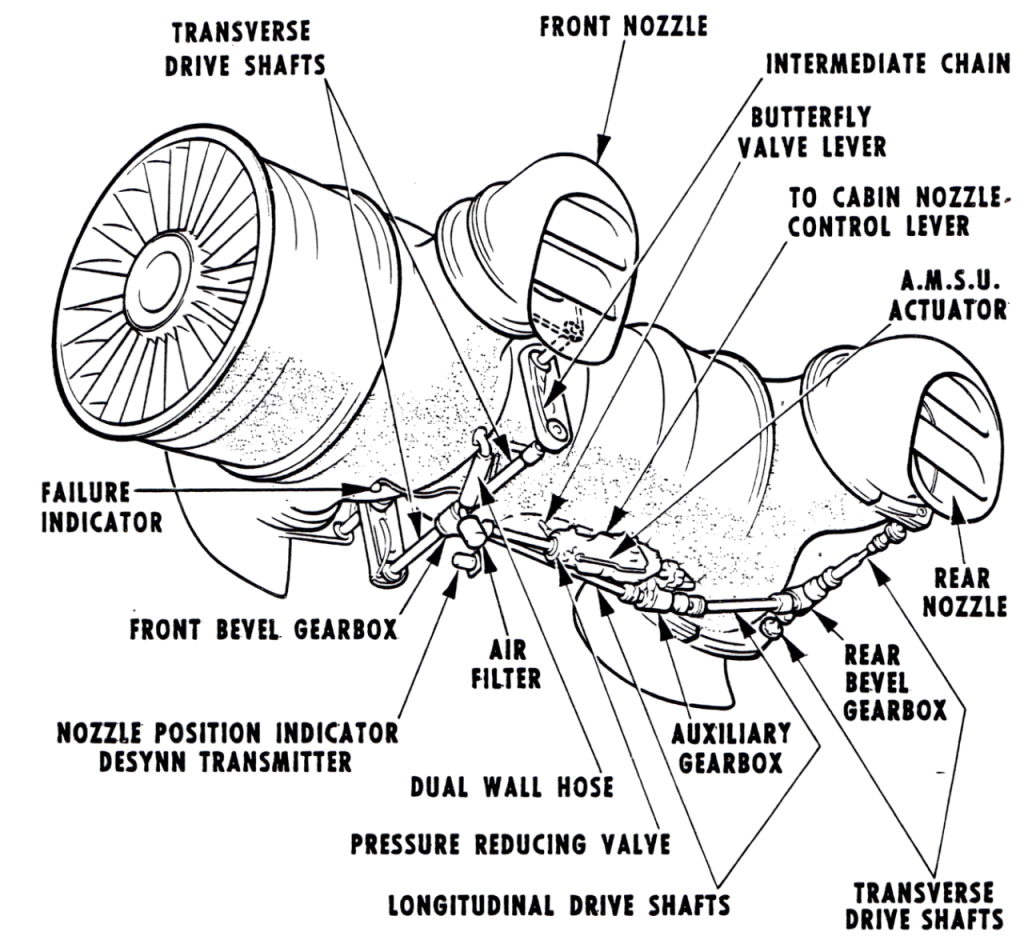
The Rolls-Royce Pegasus engine was the cornerstone of the Harrier’s revolutionary V/STOL capabilities, evolving through several variants to power different versions of the aircraft. The initial production Pegasus engine, the Mk103, was installed in the first-generation Harriers, such as the Hawker Siddeley Harrier GR1 and GR3. This engine provided approximately 19,000 pounds of thrust, offering the pioneering thrust vectoring capability that enabled vertical and short takeoffs and landings. These early Harriers were primarily used by the Royal Air Force and demonstrated the operational potential of V/STOL technology.
As the Harrier evolved, the more powerful Pegasus Mk104 became the engine of choice for the British Harrier GR3 and the Royal Navy’s Sea Harrier FRS.1. The Mk104 was an upgraded version, delivering 21,500 pounds of thrust, which supported greater payloads and improved performance for both land-based and shipborne operations. This engine remained a crucial component for naval and expeditionary missions, enabling operations from aircraft carriers and rough field conditions.
The Rolls-Royce Pegasus Mk105 engine was an upgraded variant of the Mk104, specifically developed for the export market and some later iterations of first-generation Harrier aircraft. It maintained the thrust levels of the Mk104, delivering approximately 21,500 pounds of thrust, but incorporated design refinements for greater durability and reliability.
The Mk105 was particularly associated with Harriers operated by export customers, including nations like Spain and India. For example, the Spanish Navy’s AV-8S Matador and the Indian Navy’s Sea Harrier FRS.51 were powered by the Mk105 engine. These aircraft needed a robust engine to support shipborne operations under varied environmental conditions, and the Mk105 proved capable of meeting those requirements.
The subsequent Pegasus Mk106 marked a significant step forward, designed specifically for the next-generation Harrier II aircraft. This included the British Harrier GR5, GR7, GR9, and the American AV-8B Harrier II. The Mk106 offered nearly 23,800 pounds of thrust, providing the additional power needed to accommodate the heavier and more advanced airframes of the Harrier II series. This engine’s increased thrust allowed the Harrier II to carry heavier payloads, achieve greater range, and operate more efficiently while retaining its exceptional V/STOL capabilities.
Each version of the Pegasus engine was tailored to the evolving needs of the Harrier aircraft, enabling them to remain a versatile and effective platform in modern military operations. The engine’s development mirrored the advancements in the aircraft it powered, ensuring the Harrier remained a critical asset for the forces that employed it.